
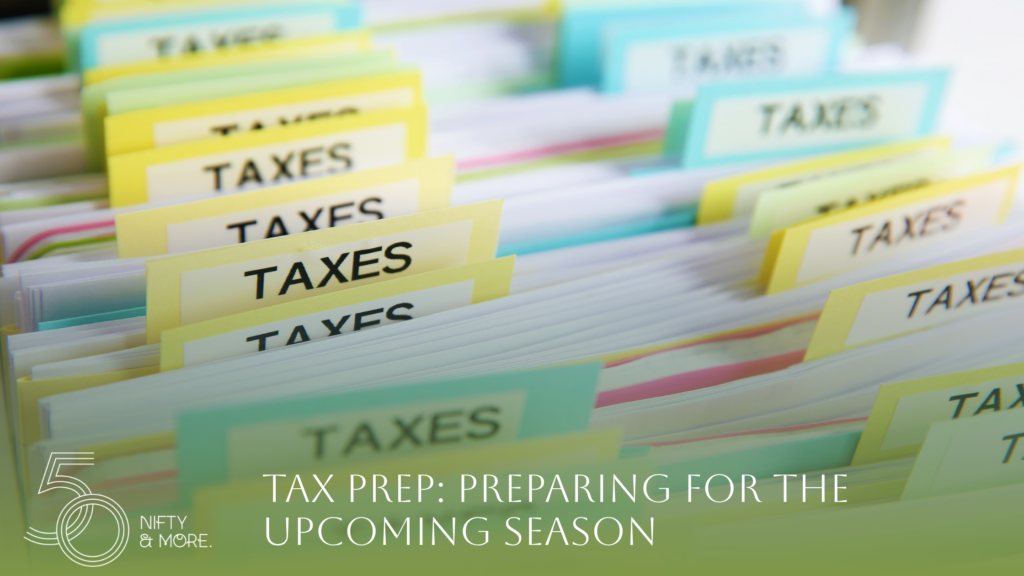
It may be October, but the smartest time to prepare for tax season is before it begins. A little organizing now means less stress, and potentially more money in your pocket, come filing time.
1. Start your document folder. Create a physical folder or a secure digital one. Throughout the year, drop in anything tax-related: pension or Social Security statements, medical bills, charitable donation receipts, property tax records, and any 1099s or W-2s from part-time work or side income.
2. Review your income picture. Are you working, retired, or somewhere in between? Withdrawals from retirement accounts, Social Security benefits, consulting gigs, and rental income can all affect what you owe. If you’re 73 or older, remember that required minimum distributions (RMDs) from retirement accounts may apply. Check current rules or ask a professional.
3. Take advantage of the 50+ perks. If you’re still working, catch-up contributions to retirement accounts let you save more than younger workers can. Review your limits before year-end.
4. Look at your deductions. Medical expenses, charitable giving to your church or favorite organizations, and other costs may be deductible if you itemize. Keep records of everything.
5. Check your withholding. Big life changes like retirement, a new job, or a change in marital status can throw off your estimated payments. It’s better to adjust now than get a surprise bill in April.
6. Mark your calendar. Tax forms generally arrive by the end of January. Open enrollment for Medicare runs October 15 to December 7, so review your coverage while you’re at it.
7. Get trusted help. A reputable tax professional or CPA is worth it. If cost is a concern, look into free help like the IRS’s VITA program or AARP Foundation Tax-Aide, which is available to everyone with a focus on those 50+. Beware of anyone who promises an unusually large refund or asks for a cut of it.
Building generational wealth starts with knowing exactly where you stand. Keep good records, ask questions, and don’t be shy about getting support.
Tax laws change, so confirm current rules with the IRS or a qualified tax professional.


Be the first to comment